Where Speed Meets Healing: The Mission Behind Track Heroes
As a veteran-owned company, supporting organizations that strengthen and support the motorsports community beyond the racetrack has always mattered to us. That’s why we’re proud to partner with Track Heroes, a nonprofit using high-performance driving experiences to help Veterans and First Responders navigate PTSD, anxiety, depression, and the challenges that can follow service.
What they’re building goes far beyond a track day. Their work is creating measurable impact, real connection, and in some cases, life-changing outcomes.
High Speed Mental Health: How Real Track Heroes Is Redefining Support for Veterans and First Responders
A veteran who attended a Track Heroes program at the BMW Performance Center had already decided he was done. Not burned out. Not struggling. Done. He had planned to end his life, and he viewed the invitation to participate as one last meaningful experience before he was gone. He expected a good day. What he did not expect was hope.
By the end of that program, after the laps, the conversation, the connection, and the science- something had shifted. He later told the founder that what had felt like a cave had become a short tunnel. Then he placed something in the founder's hand: the bullet he no longer needed.
That is Track Heroes. That is what this work is about.

What Is Track Heroes?
Track Heroes is a 501(c)(3) nonprofit providing stigma-free mental health support to underserved Veterans and First Responders struggling with PTSD, anxiety, and depression stemming from experiences in service and the often-turbulent transition to civilian life. Founded in 2020 and based in South Carolina, the organization has grown from a single annual event into a multi-venue, multi-program initiative reaching participants across the East Coast and Southeast.
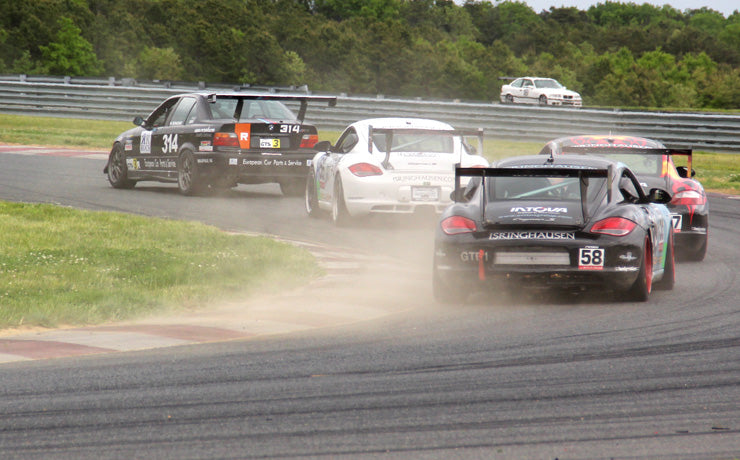
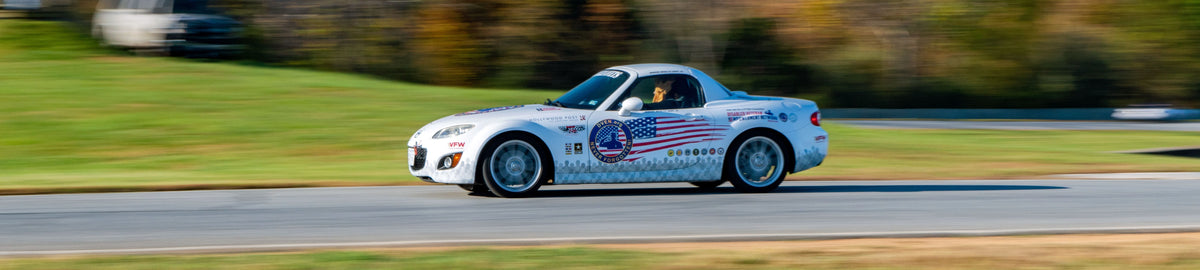
The concept is deceptively simple and genuinely innovative: bring Veterans and First Responders to a high-performance driving environment, put them behind the wheel at venues like Virginia International Raceway, Carolina Motorsports Park, and the BMW Performance Center, and pair that adrenaline-driven experience with neuroscience education, structured community-building, and evidence-based resilience tools. The approach fuses high-octane excitement with positive experiences that encourage team-building camaraderie and does so in a way that sidesteps the stigma that too often keeps high-performing service members and first responders from seeking the support they need and deserve.

The Problem They're Solving
Veterans and First Responders carry a physiological burden that most people never encounter. Some call it invisible wounds. Repeated exposure to extreme stress from combat, crisis response, and traumatic incident after traumatic incident leaves a measurable imprint on the nervous system. The Track Heroes team describes this as autonomic dysregulation: a state in which the body's fight-or-flight response no longer resets cleanly. The result is chronic hyperarousal, sleep disturbance, emotional reactivity, TBI and PTSD symptom burden, and a creeping inability to regulate what feels like an unmanageable internal state.
Standard support models for symptom self-report, medication, and therapy alone address some of this, but they rarely measure what's changing in the body and often fail to engage the population most in need. Warriors, by culture and by training, don't sit easily in a clinical chair. They respond to challenge, to purpose, to peers. Track Heroes meets them where they are.
The racetrack is not incidental to the mission. It is the mission. The controlled, high-stakes environment where focus is required, where the consequences of inattention are immediate, and where participants feel genuinely alive creates the neurological conditions that make the follow-on education and community-building land differently than they would in a conference room.

The Science Behind the Speed
Track Heroes has evolved well beyond a feel-good day at the track. The organization's Autonomic Integration and Recovery (AIR) program represents a measurable, structured approach to resilience intervention grounded in neuroscience.
The AIR framework targets adaptive control over autonomic arousal, the ability to regulate the body's stress response in real time and over time. The program combines high-performance training environments with objective physiological measurement, including quantitative electroencephalography (qEEG), standardized symptom assessments, and structured qualitative interviews. Crucially, it does not rely on participants' self-reports of how they feel. It measures what is happening in their nervous systems before and after intervention.
The early results are significant. In pilot testing, seven out of eight participants showed increased Peak Alpha Frequency, a neurophysiological marker associated with improved cognitive regulation and reduced stress reactivity. The within-subject effect size was moderate to large (d ≈ 0.90). Participants reported reductions in PTSD, TBI, anxiety, and depressive symptoms. No adverse effects were observed. These are preliminary findings, but they represent exactly the kind of objective signal that the field has lacked: measurable, reproducible, and designed for rigorous external validation.
The AIR program is now IRB-ready, with a research plan structured for institutional review and positioned to generate state-level data capable of informing future policy on Veteran and First Responder resilience programming. Track Heroes is not asking for recognition. They are building the evidence base.

More Than One Day
It would be easy to reduce Track Heroes to its signature experience, the helmets, the track time, the burst of adrenaline, and miss the larger architecture of what the organization is building. The track event is a catalyst. What it triggers is the real product.
Track Heroes integrates mental health therapies with High Performance Driver Education events to help participants avoid the stigma associated with mental health support. At each event, participants receive structured education on neuroscience, specifically, how the brain and body respond to threat and stress, why those responses become dysregulated after prolonged service, and what tools exist to begin rebuilding regulatory capacity. That education, delivered in the context of an experience participants have just lived, hits differently than a pamphlet or a briefing. It provides a framework for symptoms that have felt random, permanent, and isolating. It names the pattern. It offers a path.
The camaraderie piece is equally essential. Army veteran Brian Ellis, who has participated in multiple Track Heroes events, put it directly: "Comradery with these guys. We are pretty much on the same mindset. I actually just met a guy, we were on the same battalion six years ago." The reconnection that happens when warriors share a high-stakes environment with peers who understand the weight they carry is not a side effect of the program. It is a core mechanism of the intervention.

A Growing Footprint
Track Heroes has expanded its reach considerably since its founding. The organization now partners with some of the most respected motorsports clubs and venues in the country, including the Porsche Club of America's First Settler's Region, the BMW Car Club of America's Peachtree and Sandlapper Regions, the Audi Club Potomac-Chesapeake Chapter, and events like 944 Fest and the annual Deathtrap Invitational. Track time has been held at Virginia International Raceway, Carolina Motorsports Park, Road Atlanta, and Roebling Road Raceway, among others.
As donations grow and participants re-engage the program multiple times, the organization's goal is to replicate the program regionally by building a network of local chapters that can serve the Veteran and First Responder communities closest to them with the same structured, evidence-based approach that has defined the program from the beginning. Beyond live track events, Track Heroes now offers sim racing leagues through iRacing, giving participants a year-round community touchpoint and ongoing engagement between events.

Why It Matters
The mental health crisis in the Veteran and First Responder communities is not abstract. The statistics are well documented, and the need for solutions that work for people who are often skeptical of traditional support models is urgent. Track Heroes exists at that intersection. It does not ask participants to see themselves as patients. It invites them to be athletes, competitors, and teammates, and quietly delivers the neuroscience-backed support they need in a format that matches who they are.
The veteran who handed back that bullet is not a case study. He is the reason this organization exists and deserves every form of support the community can provide. Track Heroes seeks to educate the public to advocate for meaningful change to mental health accommodations across communities at large, and every sponsor, donor, volunteer, and partner who gets behind this mission is part of making that change real.
If you are a Veteran or First Responder interested in participating, registration for upcoming events is free and available at trackheroes.org. If you want to support the mission, sponsorship and donation information is available there as well. This work is too important not to grow.