

The Complete Guide to Head + Neck Restraints
Motorsports has always been about risk vs reward. We chase faster laps, later braking zones, and the thrill of speed, but there’s a reason every driver’s meeting ends with the same line: “Remember, safety first.” Helmets, harnesses, and seats get most of the spotlight, but one critical piece of equipment often gets overlooked: the head and neck restraint.
If you’ve been around the paddock, you’ve probably heard the debate: Do I really need one yet? Or maybe you’ve wondered which design. HANS or Hybrid? Which makes the most sense for your event. The truth is, this isn’t just a gear purchase. It’s a decision about whether you’ll walk away from an accident. History is proof that they work!
Let’s unpack when it’s time to upgrade and how to pick the correct device for you, your driving, and your car’s current equipment.

Why Neck Protection Matters
When a crash happens, it’s rarely the roll cage or the belts that fail. It’s physics. In a sudden stop, your torso is locked down by the harness, but your head keeps moving forward with all the momentum it carried. Even in a slow-speed crash as low as 35 mph, there is risk! The strain on your neck can reach a thousand pounds of force in fractions of a second. That’s where basilar skull fractures come from, the same type of injury that claimed Dale Earnhardt, and if you look at his accident, it was not particularly violent.
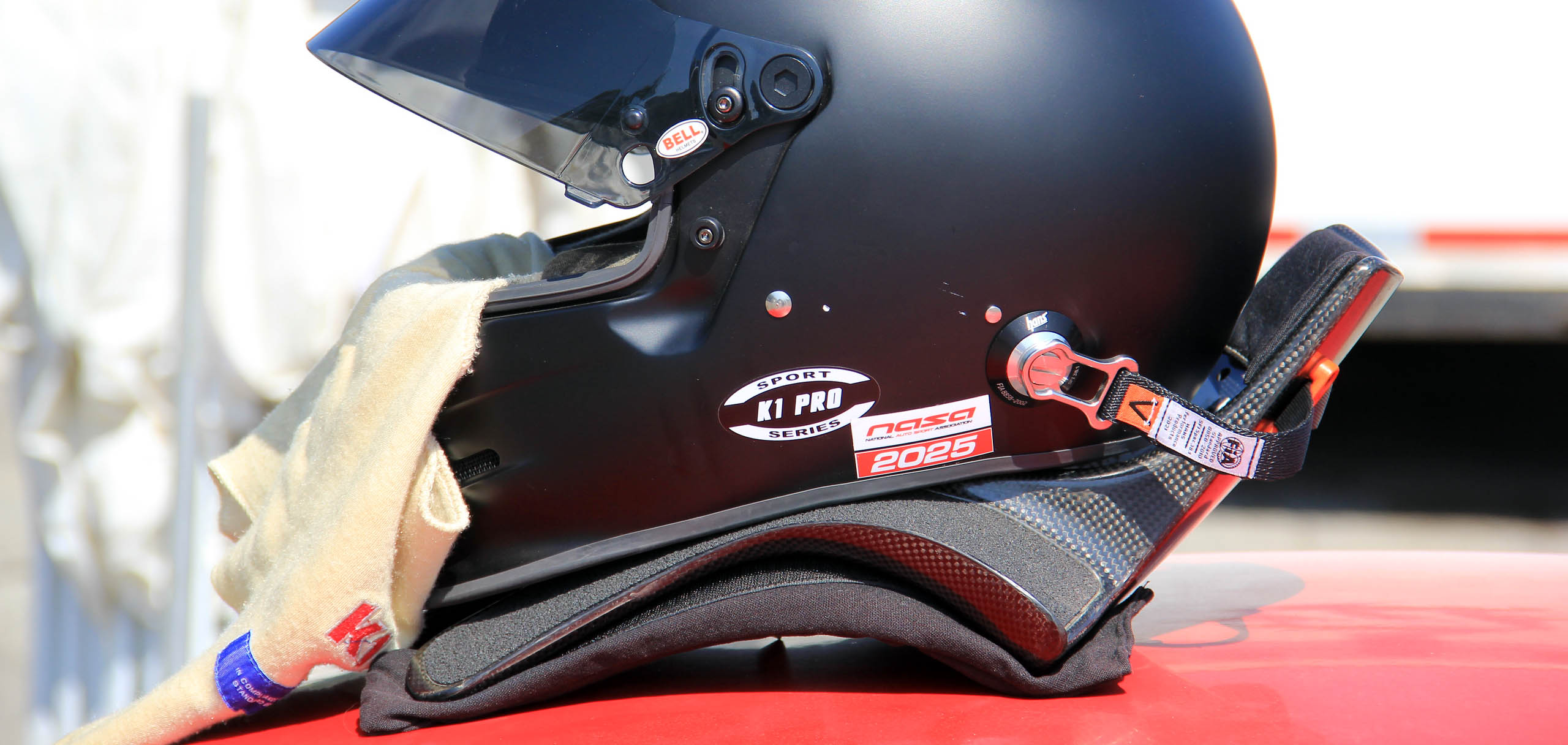
A head and neck restraint redirects those forces from your neck into your shoulders and harness system. Instead of your vertebrae taking the punishment, the restraint distributes it across equipment designed to handle the load. It’s not hype — it’s biomechanics.

When to Make the Jump?
Your Speed Is Climbing
HPDE beginners may get away without one for a while, but once you’re pushing harder or carrying real speed into fast corners, the risk isn’t theoretical anymore. Even a “small” impact at 35 mph can generate loads on your neck heavy enough to cause serious injury.
You’ve Upgraded Your Safety Gear
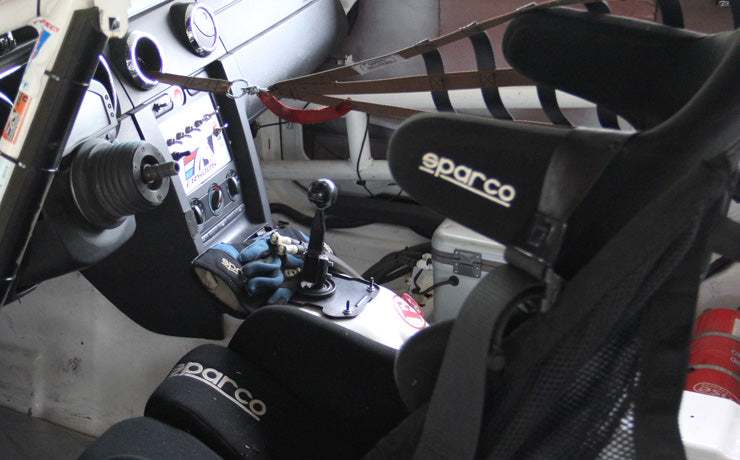
A proper fixed-back seat and five- or six-point harness are game changers for driver control and safety. But they also create a new risk: while your body is strapped down tight, your head isn’t. At this point, adding a restraint isn’t optional. It is mandatory. A head and neck restraint completes the system.
You’re Moving Toward Competition
Most sanctioning bodies require SFI 38.1 or FIA-approved devices for wheel-to-wheel racing. If your ambitions include Time Trial, endurance racing, or sprint races, you’ll need one to get on the grid. Getting used to the fit and feel now means no surprises when it matters most.
You Want to Drive Tomorrow
Even if you never plan to race competitively, think about why you’re at the track in the first place. For most of us, it’s passion, and that passion doesn’t mean much if one incident sidelines you permanently. Sometimes the “right time” is simply right now. For a minor investment, you can keep your head on straight for years to come!

How to Choose the Right Device
Not all restraints are created equal. The right one for you depends on your car, your seat, and how you use them.
Material: Composite vs. Carbon Fiber
Composite models are affordable, durable, and perfectly safe. They’re slightly heavier, but for HPDE or sprint racing, you won’t notice much.
Carbon fiber models cut weight dramatically. Sure, it is not any easier on your shoulders, but it can help to lighten the overall weight of your gear package. Regarding device weight, don’t focus on driver fatigue; focus on overall weight savings. Just like the carbon hood didn’t make anything work better, it made the whole package lighter. They may cost more, but there is a reason many pros swear by them.
Device Angle: 20° vs. 30°
If you’re in an upright driving position (sedans, coupes, most sports cars), a 20° device is the standard.
Formula cars, prototypes, and other vehicles with laid-back seating positions call for 30°. The angle matches your posture, so the restraint rests correctly on your shoulders.
Attachment Style
Most drivers run post-anchors. They are easy to get on and off with a little practice and have become the industry standard. Quick-release versions are available for faster exits, but I will say they are a pain in the butt to get on without help. The only time I recommend the quick-release versions is for extremely dirty environments where the spring in the post-anchor may become impacted by excess dirt.
Comfort and Fit
Here’s the reality: the most advanced device in the world won’t help if you don’t wear it properly. Try one on with your harness and helmet if you can. Check for collarbone pressure points, belt fitment, and ease of movement.
Here are a couple of rules of thumb that will help you with fitment if you cannot try one before you buy. For the HANS or similar style device, such as the Stand 21, is your neck smaller or larger than 16 inches? For sizes smaller than 16 inches, you will want a medium, and for sizes larger, you will want a large. It’s that simple. For the hybrid, take a chest measurement, then consult the sizing chart for the best fit.

HANS vs. Hybrid: The Classic Debate
If you’ve made it this far, you’ve probably asked yourself the biggest question: Do I go with a traditional HANS Device, or do I pick a Hybrid restraint? Both are legal. Both are safe. But they shine in different scenarios.
Why Choose a HANS?
-
Harness-friendly: Built to work seamlessly with five- and six-point systems. If you’re in a race-prepped car, this is the standard.
-
Proven performance: Decades of use across NASCAR, IMSA, Formula 1, and grassroots club racing.
-
Value options: The composite HANS sport model is often the most cost-effective way to get into a restraint.
-
Set it and forget it: Once belted in, a HANS practically disappears.
Why Choose a Hybrid?
-
Versatility: Works with both harnesses and three-point belts. Perfect for drivers who use the same car on the street and at the track. Or a driver with multiple vehicles.
-
Lateral support: This is what sets the Hybrid apart; while the HANS only controls frontal head movement, the Hybrid helps control head movement front-to-back and side-to-side. So if you don’t want to invest in a containment seat, this might just be the best device for you.
-
Street-to-track solution: If you’re still using factory belts at some events, the Hybrid is your only option for certified protection.
-
Bottom Line: If your car is a full-time track machine with a proper seat and harness, a HANS is the right choice. If you split time between daily driving and track days, or if you’re not ready to commit to a race seat yet, the Hybrid offers unmatched flexibility.

Pro Tips from the Paddock
-
Test fit at the track. Ask fellow drivers if you can try on their device. You’ll learn more in 20 minutes belted in than you will from any spec sheets.
-
Don’t overthink the anchors. Just practice with them. It’s all about muscle memory.
-
Do not use foam collars! I would rather you have nothing on than to see you wearing one of those.
-
Get your device recertified every five years. This should include a strap replacement and a trip to the manufacturer to make sure everything is holding up well and still meets the certification limits set.
Final Thoughts
Motorsports is one of the only sports where the right equipment literally decides if you walk away. Helmets protect your head, belts protect your body, but only a head and neck restraint connects the two.
The right time to buy one isn’t defined by the lap time you run or the class you race. It’s defined by your willingness to keep driving tomorrow. As for which model to choose, it comes down to how you drive, what you drive, and where you want your racing to take you. In the end, the best story isn’t about who set the fastest lap. It’s about who kept coming back, season after season, because they made the right call on safety.